
Most commercial fence projects in the US come down to three choices: welded wire mesh, chain link, or ornamental steel and aluminum. All three will keep people on the right side of a property line. They differ in what they cost, how long they look new, how hard they are to climb and cut, and what they say about the building behind them.
This is the comparison we walk through with contractors and specifiers most often, including the part where the obvious choice turns out to be wrong.
The short answer
- Chain link is the lowest material cost per foot and the fastest to install over long, rough runs. It also looks like a budget decision, because it usually is one.
- Welded wire mesh is the middle ground: rigid panels, a clean flat line, far better resistance to climbing and cutting than chain link, and a finish that still looks intentional after ten years.
- Ornamental steel and aluminum cost the most per foot and buy appearance and a formal boundary, not security. Pickets are climbable by design.
- For anything where a breach is expensive, 358 anti-climb mesh is a separate category and the right starting point.
- The decider is usually not the fence. It is the sightline you want, the maintenance budget nobody has, and how much a breach actually costs.
Welded wire mesh fence
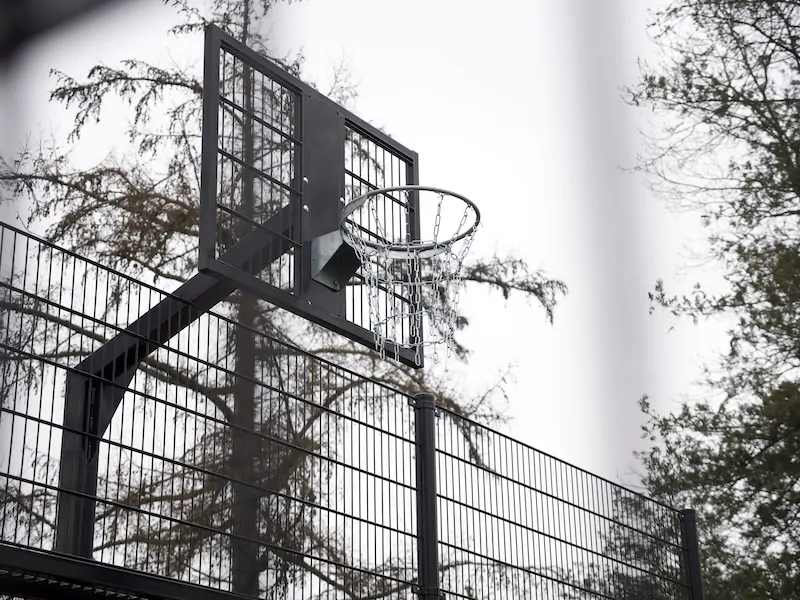
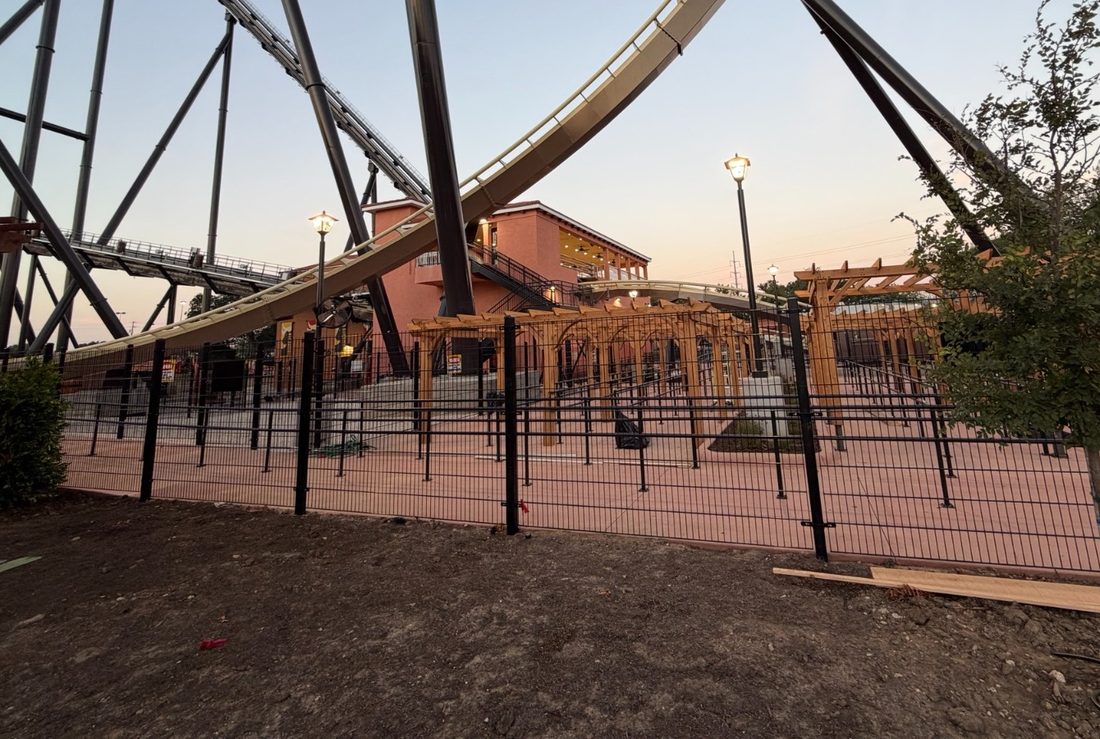
Welded wire mesh fence is a rigid panel: horizontal and vertical wires welded at every intersection, then galvanized and powder coated, and bolted to posts with brackets. Because the panel is rigid, the fence line stays flat and level instead of following whatever the fabric feels like doing.
That rigidity is the whole point. A welded panel cannot be lifted at the bottom rail, it does not bag out in the middle of a bay, and cutting a hole takes a tool and time rather than a pair of side cutters and a minute. Our US range runs 4/6/4 gauge (0.236 inch verticals with 0.197 inch horizontals), 6/6 gauge, and the heavier 0/4/0 with 5/16 inch verticals, in 4, 6 and 8 foot nominal heights and panels 8 feet 2¾ inches wide (2,508 mm).
Best for
- Schools, sports facilities, utilities, industrial yards and anywhere the fence is visible and permanent
- Projects where the line has to look straight and stay straight
- Sites that want deterrence without a prison aesthetic
- Runs that will later get privacy slats, since the mesh accepts them
Where it disappoints
- Panels come in fixed widths, so an odd run length means cutting a panel or planning a short bay
- It follows grade in steps rather than sweeping curves, which needs thought on a slope
- Material cost per foot sits above chain link, and on a mile of rural boundary that difference is real money
Chain link fence
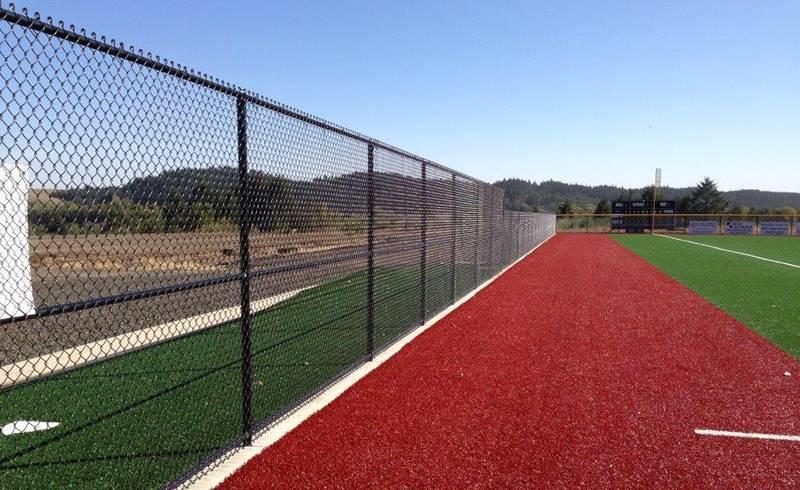
Chain link is woven wire fabric stretched between line posts and tensioned with rails and bands. It is flexible, forgiving over uneven ground, cheap per foot, and the fastest way to enclose a large area.
The trade-off is that everything that makes it flexible also makes it easy to defeat. The fabric can be lifted at the bottom, pushed out between posts, cut with hand tools, and climbed like a ladder because the diamond mesh is a series of footholds. Black powder coated chain link has closed a lot of the appearance gap and is a genuinely good-looking fence, but it is still fabric on posts.
Best for
- Long boundaries where cost per foot decides the job
- Rough or rolling terrain, where the fabric follows grade without custom panels
- Temporary and semi-permanent enclosures
- Ball containment and backstops, where height matters more than climb resistance
Where it disappoints
- Climbing and cutting are both easy, so it deters opportunists and nobody else
- The line sags and bows over time, especially where tension was rushed
- Galvanized chain link reads as industrial, which is a problem on a public-facing frontage
Ornamental steel and aluminum fence
Ornamental fence is a picket panel: vertical pickets fixed to horizontal rails, in steel where strength matters or aluminum where corrosion does. It is the fence you specify when the boundary has to look designed, around a residential development, a pool, a campus frontage or a commercial entrance.
It is worth being honest about what it does. A picket fence marks a line, contains people and looks good doing it. It does not resist climbing, because a picket fence is a ladder with a decorative top. Where security is a real requirement, ornamental fence belongs at the frontage with something more serious around the back.
Best for
- Frontages, entrances and anywhere the fence is part of the architecture
- Pool enclosures, where code compliance and appearance both matter
- Aluminum in coastal and wet environments, where steel needs more attention
Where it disappoints
- Highest cost per foot of the three
- Pickets are climbable, so it is a boundary rather than a barrier
- Damage is repaired panel by panel, not by re-tensioning a section
When security is the actual requirement: 358 mesh
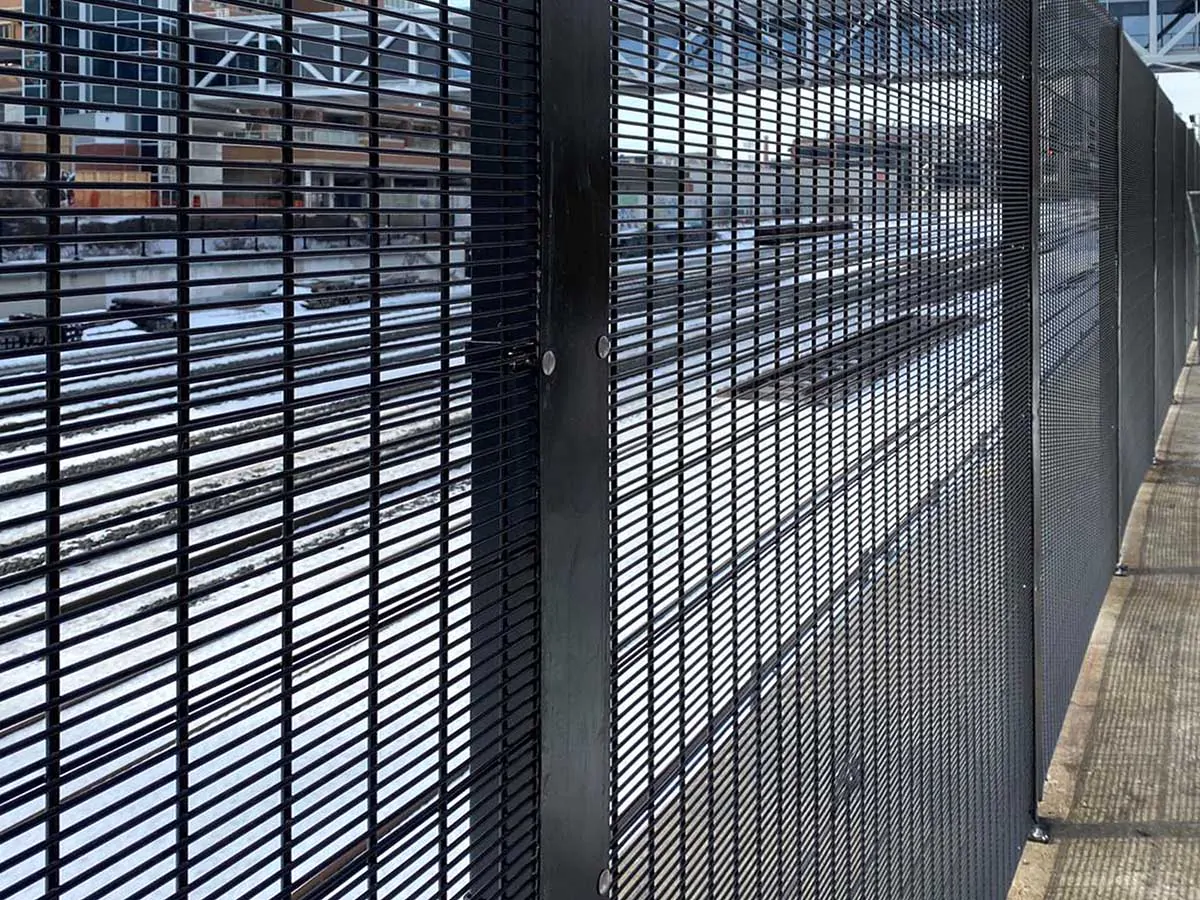
If a breach costs more than the fence, none of the three is the right answer on its own. 358 anti-climb mesh, named for its aperture of 3 inches by 0.5 inches in 8 gauge wire, has openings too small for fingers and boot tips. There is nothing to grip and nothing to stand on, and cutting through it means cutting a lot of heavy welded wire.
This is what goes around substations, correctional facilities, water treatment plants, telecom sites and data centers. It is not the fence for a schoolyard boundary and it does not need to be. Specify it where the risk actually sits and use a lighter mesh elsewhere on the same site.
Five questions that decide it
- What happens if someone gets through? If the answer is a stolen tool, chain link is fine. If it is a shutdown, an outage or a liability claim, you are in welded wire or 358 territory.
- Who sees this fence? A frontage on a public road is an appearance decision. A back boundary behind a building is not.
- Do you need to see through it, or not be seen through it? Mesh gives sightlines and can take privacy slats later. Pickets always show through. Chain link with slats sags where mesh with slats stays flat.
- Who maintains it in year seven? Powder coated welded wire and aluminum are close to zero maintenance. Chain link needs re-tensioning and picks up damage at the bottom rail.
- How straight is the ground? Rolling terrain favors chain link or stepped panels. A flat, visible line favors rigid panels, which is where they look best.
Specifications that decide the job
Two numbers cause most of the ordering mistakes we see, and both are easy to check before the order goes in.
- Panel width, because it sets your bay spacing. Our US welded wire panels are 8 feet 2¾ inches wide (2,508 mm), so the post count follows the panel count, not a round number of feet.
- Wire gauge, because it is where the strength is. 4/6/4 gauge means 0.236 inch verticals with 0.197 inch horizontals; 0/4/0 steps the verticals up to 5/16 inch for heavier duty work. Two panels can look identical in a photo and behave completely differently under a boot.
- Nominal height versus panel height, because the post has to be longer than the fence. A 4 foot fence, a 6 foot fence and an 8 foot fence each take a different post length once it is set in concrete.
- Finish, because galvanized and powder coated are not the same product in year ten. Our US standard is Black RAL 9005 over galvanized steel.
Frequently asked questions
Which fence is the most secure?
358 anti-climb mesh, by a wide margin. After that, welded wire mesh, then ornamental steel, then chain link. The ranking follows how hard the fence is to climb and to cut, which are the two things that actually happen.
Is welded wire fence more expensive than chain link?
Per foot of material, yes. Over the life of the fence the gap narrows, because welded panels do not need re-tensioning and a powder coated panel still looks straight and black after years of weather. On a short, visible run the difference is small. On a mile of rural boundary it is not.
Can I get privacy with a mesh fence?
Yes. Privacy slats weave through the mesh and turn an open panel into a solid screen, at a fraction of the cost of a wood or vinyl privacy fence. Because the panel is rigid, the result stays flat instead of bowing in the wind the way slatted chain link does.
Steel or aluminum for ornamental fence?
Steel for strength and for anywhere the fence will be leaned on, hit or loaded. Aluminum for coastal, humid and poolside locations where corrosion is the bigger enemy. If the fence is both structural and wet, steel with a proper coating still wins.
Can I mix fence types on one site?
Yes, and you usually should. Ornamental at the entrance, welded wire down the sides, 358 around the plant room. Specifying one fence for a whole site means either overpaying on the back boundary or under-protecting the part that matters.
Still deciding?
Send us the site and what you are protecting and we will tell you which of the three we would specify, including when the answer is the cheaper one. Browse the full range of fence panels, or call 214 878 1900 and talk it through with someone who fences for a living.