Your integrator lands on it
Dry contacts, empty conduit and pull boxes to your spec. We do the steel; you keep the access control and the SOC you already run.
Fencing project? Request a free quote or call us today: 214 878 1900.

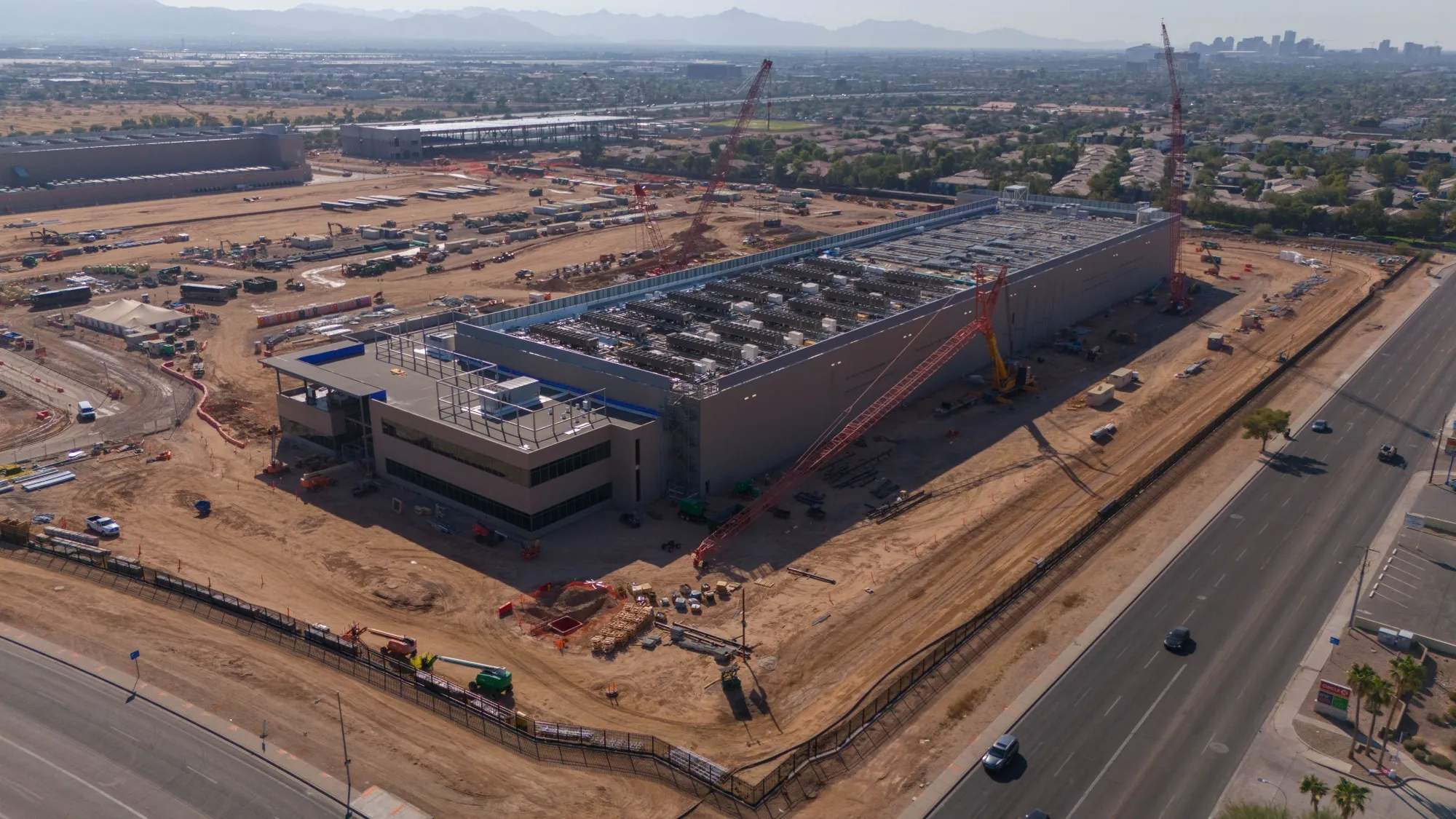
Data centers · United States
A data center perimeter is not judged on height. It is judged on time: how many minutes the line holds someone with tools. We supply SR-rated fence certified to LPS 1175, rolled in our own mill, with the spec, the takeoff and the certificate your bid needs.
Perimeter, entry and the closeout package, from stock to your site
01Count in minutes
A rating is not a quality score, it is a clock. The letter says which toolkit was used and how many attackers, the number says how many minutes of working time the system held.
SR-rated means a system was attacked in a lab and an independent body recorded the result. The standard is LPS 1175 from BRE, certification runs through the LPCB, and every certified product is listed with its exact rating on the public RedBook Live register. ASTM F2781 asks the same question on this side of the Atlantic. Anyone who says SR2 without a certificate number is selling you an opinion.
Ratings side by side
Issue 8 replaced SR1 through SR8 with a letter plus a number. Both notations still show up in specs, so we quote them together. The mesh next to each rating is drawn to scale: the higher the rating, the tighter the fabric.
| Rating | Mesh | Attack profile | Delay | Where we use it |
|---|---|---|---|---|
| A1oud: SR1 | 358 anti-climb3 x 0.5 in. mesh | Opportunist attempt with small tools that fit in a pocket | 1 min | The full site line, with detection on the fabric |
| B3oud: SR2 | Certified systemheavier post and fixings | Determined attempt with hand tools that give real leverage | 3 min | Conduit entries, generator yards, compartment fencing |
| C5oud: SR3 | Certified systemdouble-skin build | Deliberate attempt with a wide tool set, noise included | 5 min | The line closest to the data hall, high-risk sites |
| D10oud: SR4 | Strong pointusually a door or hatch | Experienced attempt with cordless power tools | 10 min | Rarely on the fence, mostly on openings in the building |
The link between the old and the new notation is the industry's working translation, not an automatic conversion, so we put the certificate number in the spec and point your consultant at the register. If your spec calls out ASTM F2781 instead, ask us: we will tell you plainly which ratings we hold and which we do not. Issue 8 also makes layering explicit, and two certified five-minute lines add up to ten minutes of delay.

Why minutes
Cameras see it. Sensors call it in. But only physical resistance buys the time your response needs. One inequality covers the whole perimeter spec.
Fence-mounted sensors, thermal and video analytics. This is minute zero.
The SOC verifies, then guards or law enforcement have to arrive.
The minutes in your fence. The only part of that sum you can buy and have certified.
02Pick the line
We do not drop a catalog on a data center site. It is one family: anti-climb fabric with the posts and fixings that belong to it. What changes is height, build and topping, and with it the rating.
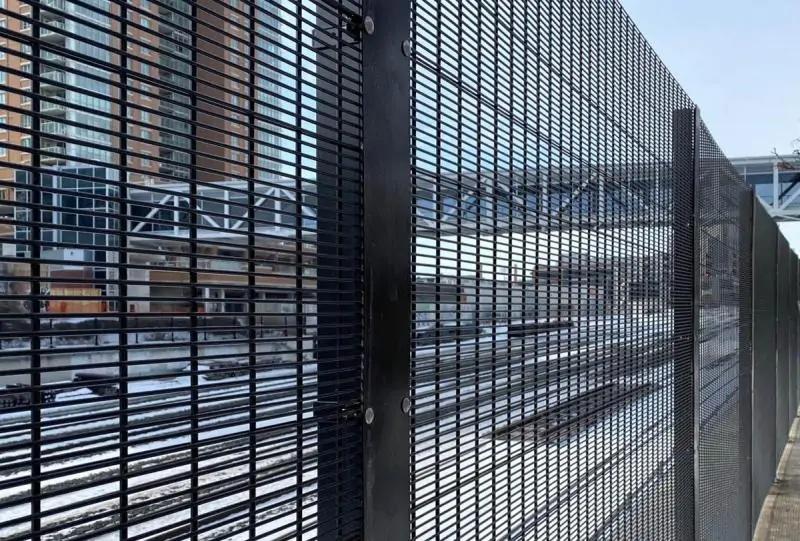 Site line
Apertures too small for fingers or tool tips, panels too stiff to pry open. Standard up to 20 feet.
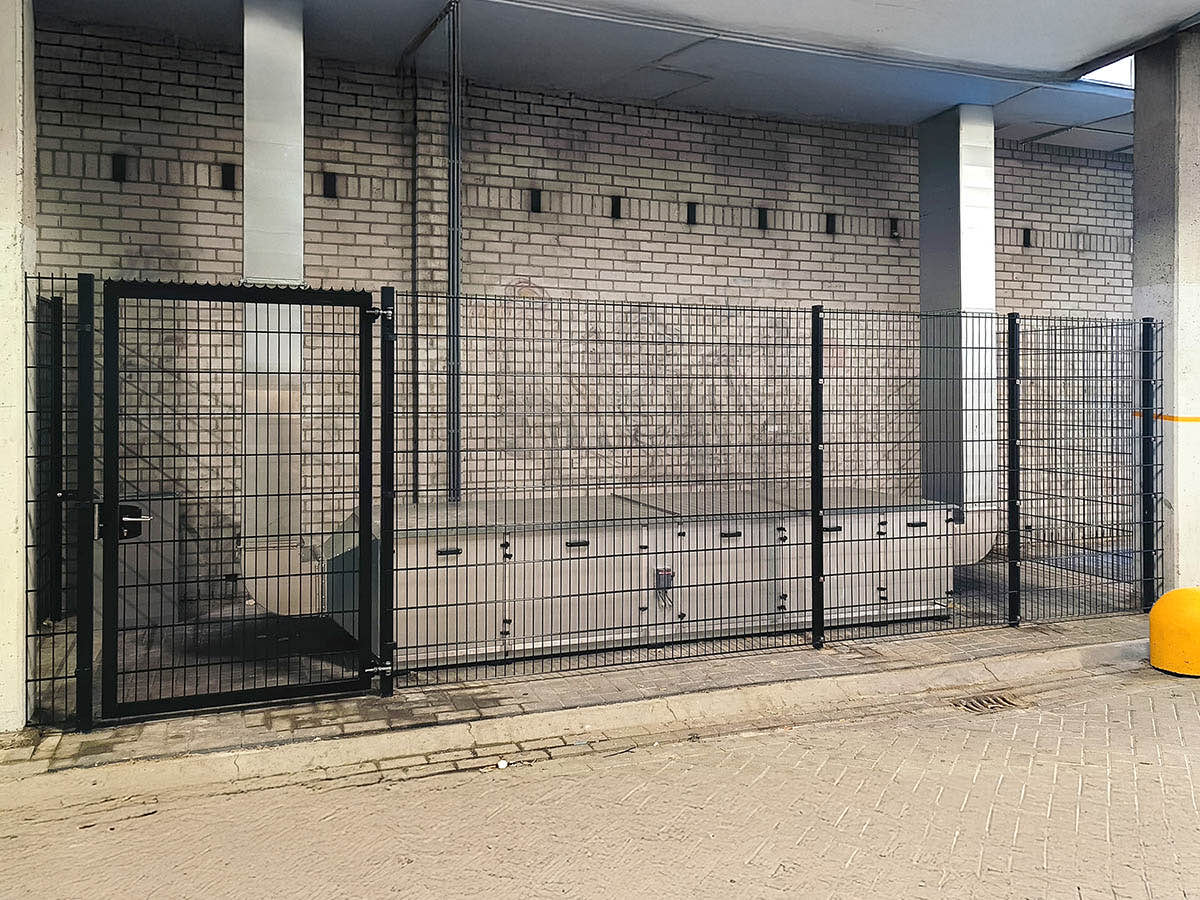 Cages
CagesGensets, chillers, transformers and conduit entries caged separately, with a roof grille and a service door.
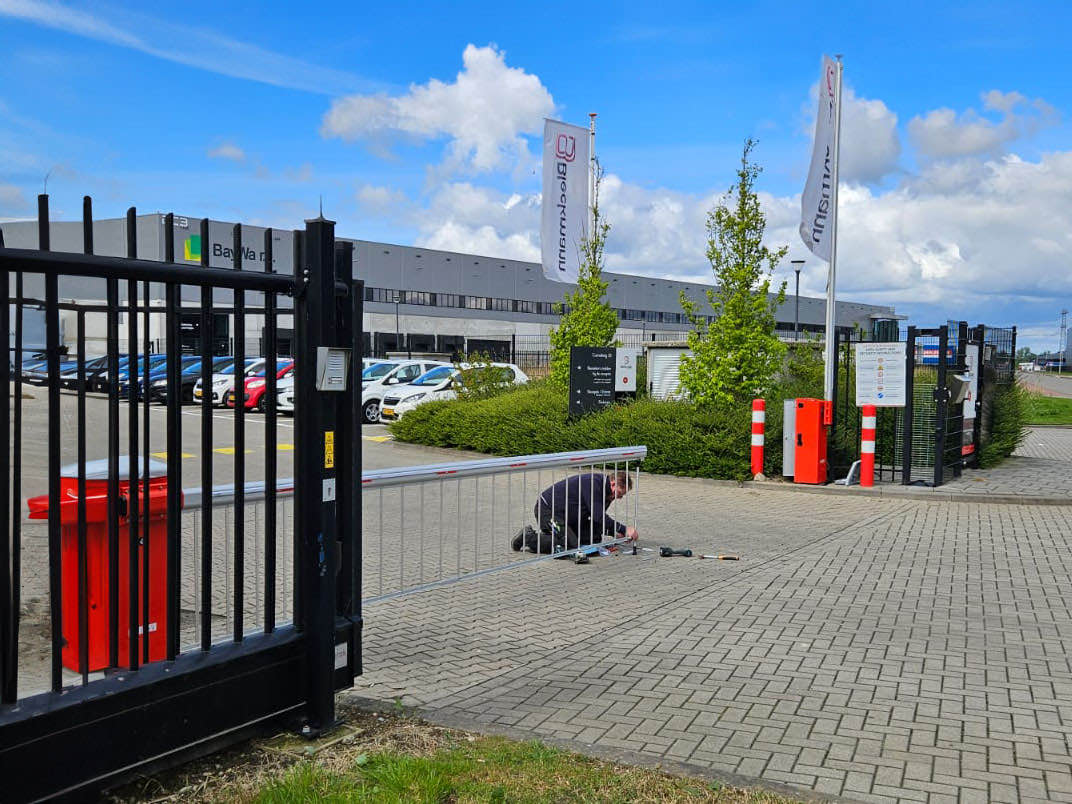 Phasing
The permanent line goes up before the first rack lands, with removable panels where construction traffic still needs a way through.
A certified system is a system: panel, post, fixing and footing belong together. Deviate from the installation instructions and the rating is gone. That is why the certificate number and the instructions ship with the order, and why your installer gets both.
| Mesh | 3 x 0.5 in. | 76.2 x 12.7 mm, no finger hold and no room for a tool tip |
|---|---|---|
| Wire | 8 ga | 4.0 mm, heavier gauge on request |
| Height | 8 to 20 ft | With or without anti-climb topping |
| Posts | 3 x 2.5 in. / 4 x 4 in. | Set in concrete or on a base plate, specified per rating |
| Coating | Duplex | Hot-dip galvanized to ASTM A123 with polyester powder coat over it |
| Detection | Ready | Brackets, cable tray and a grounding lug on the post |
Options on the linechoose per zone
03Handle the opening
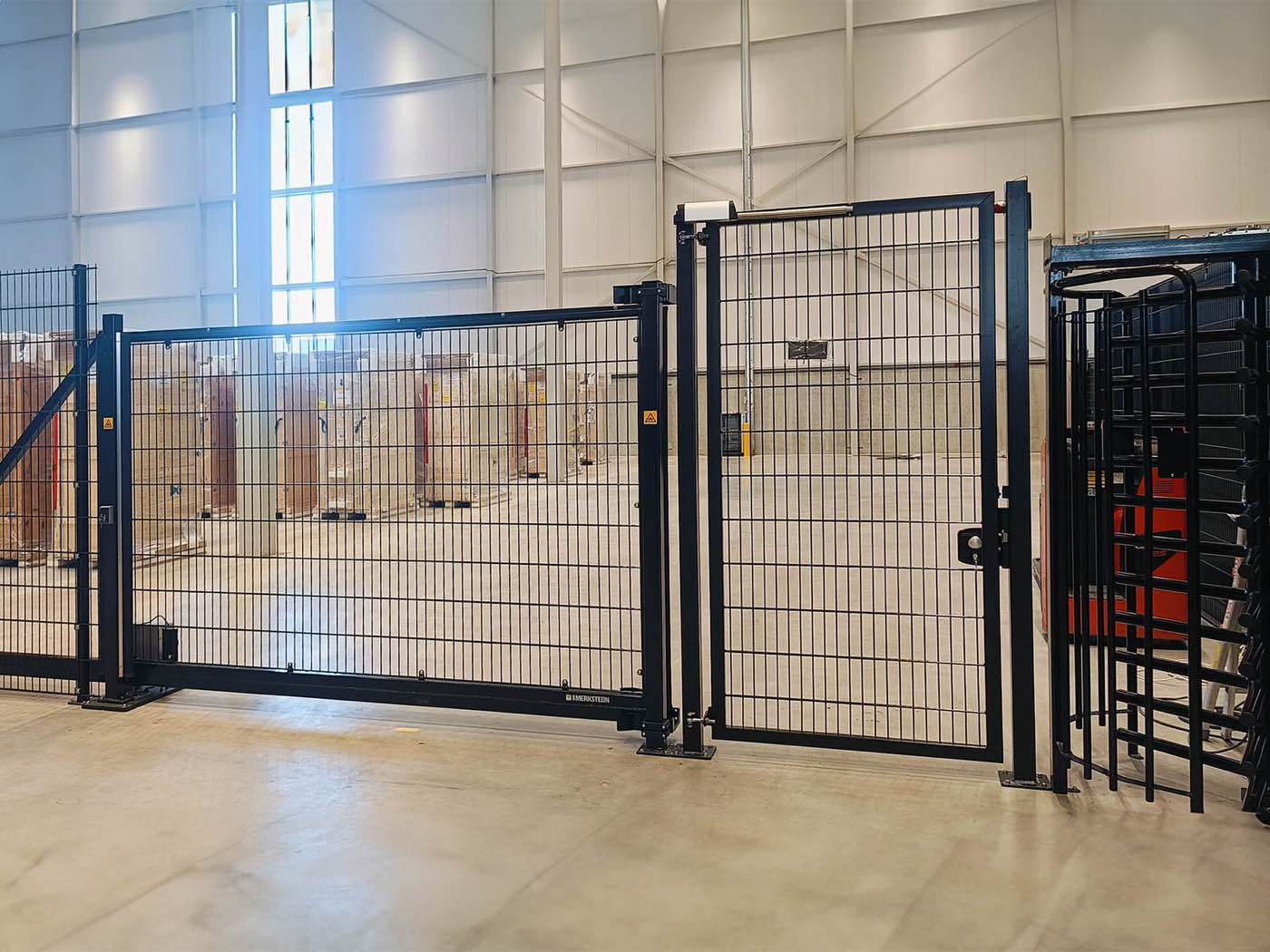
Visitors, vendor techs, couriers with hardware, a lowboy with a generator: the entry is the busiest place on the site and the one that has to open dozens of times a day. We supply the mechanical layer and hand your integrator a clean interface.
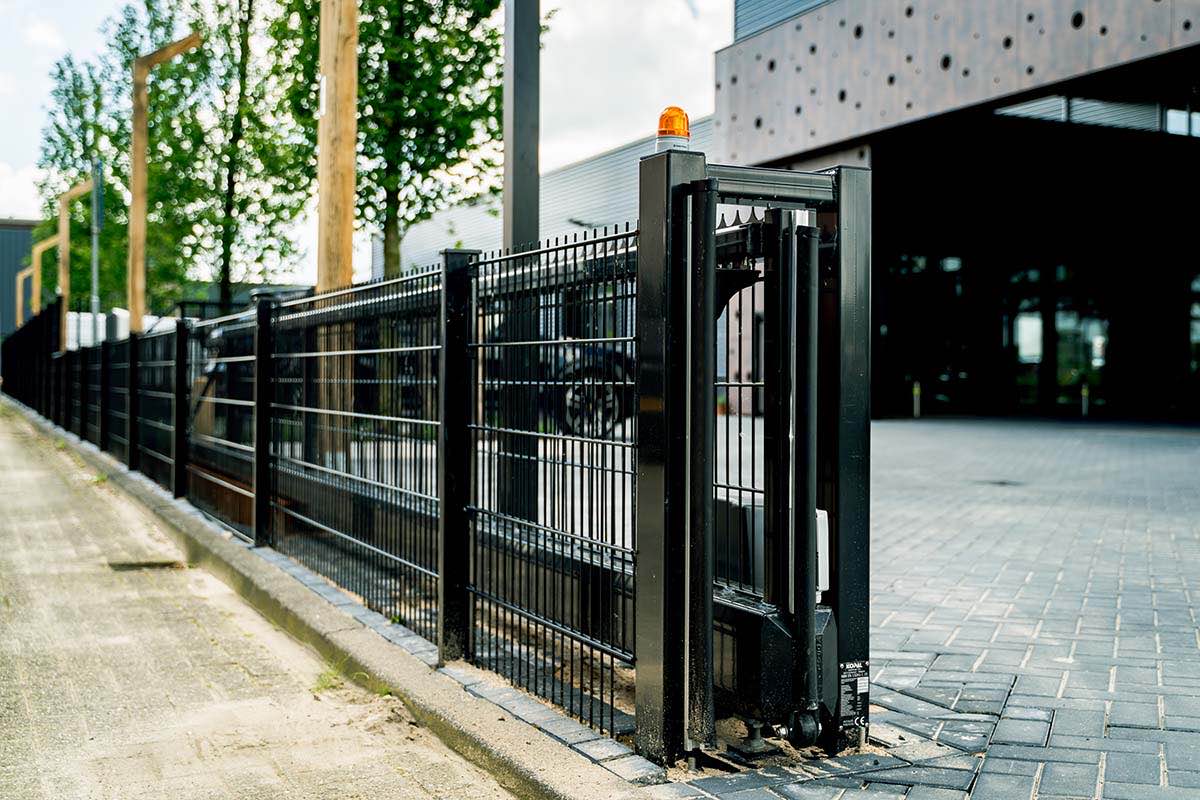 Vehicles
Clear openings to 40 feet, industrial operators with a manual release.
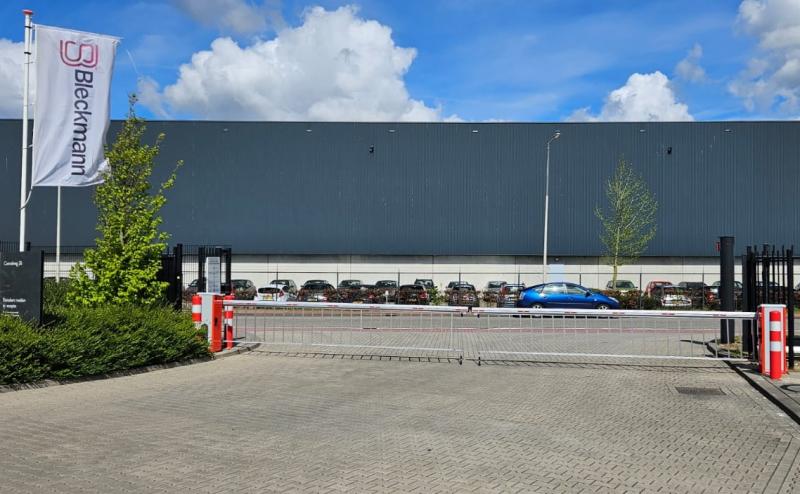 Throughput
Two openings in series, so a truck is cleared before the second one opens.
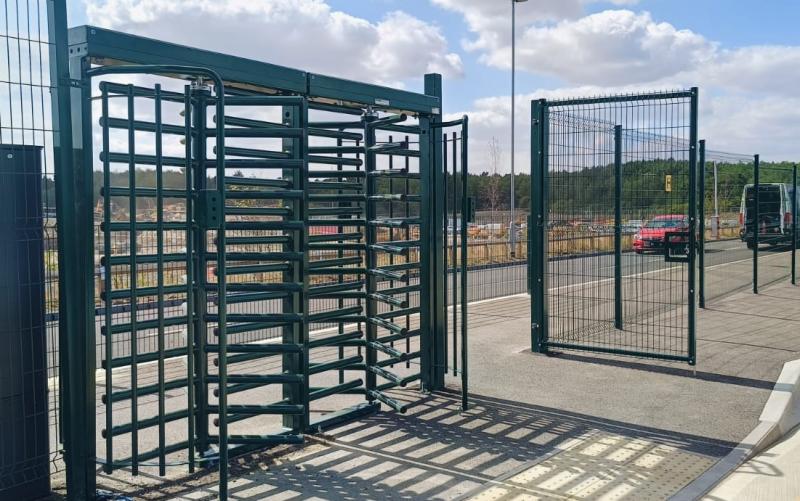 People
Set in the fence line itself, with a reader on both sides and a monitored emergency gate beside it.
Dry contacts, empty conduit and pull boxes to your spec. We do the steel; you keep the access control and the SOC you already run.
Manual release on every operator, UPS provision, and a keying schedule that matches your emergency plan.
The operator falls under UL 325, the gate panel under ASTM F2200, and a compliant install needs both plus two independent entrapment protection devices. We ship the gate to that standard and the paperwork with it.
04From drawing to delivery
This is where most perimeter jobs come apart: the fence is bought on price, the drawings never reach the crew, and the rating quietly disappears in the field. So we sell the spec with the steel, and the crew that sets it gets the same package we would hand our own people in Europe.
Closeout packagewhat you keep
This is the package you hand an auditor, an insurer or the next GC when phase two starts.
See our certificates05Put it on paper
A data center gets audited on what it can show. SOC 2 and ISO 27001 want physical access controls you can evidence, FedRAMP workloads bring the NIST 800-53 PE family with them, and TIA-942 treats site security as part of the facility rating. Every line below has a document on our side.
Both ask you to show a controlled perimeter, controlled entry points and monitoring. We deliver the closed line, the entries and the provisions for monitoring, with as-built drawings to evidence it.
PE-3 and PE-6 put physical access control and monitoring on the control list for FedRAMP environments. The rating per line and the zone plan are what an assessor reads.
Site security is part of the rating, not an afterthought bolted on later. That is why a rated line belongs in the design set, at the right rating per zone.
LPS 1175 from BRE, certified through the LPCB, is what our systems hold: tool level plus delay, with a certificate number and a register entry. ASTM F2781 is the American practice for the same question, developed for military and DHS use.
Hot-dip galvanizing with recorded coating thickness, powder coat over it for a duplex system. On Gulf coast sites we go stainless on the hardware, because the weakest link sets the service life.
The operator and the gate panel are two different standards and a compliant install needs both, with two independent entrapment protection devices. We build the gate to it and ship the compliance sheet.
Why Fenceweb
Perimeter jobs stall on lead time, or on a supplier who cannot tell you what the fence is rated for. We sit at the front of the chain: we roll the mesh ourselves, we hold it in stock, and we put the rating in writing before you bid the job.
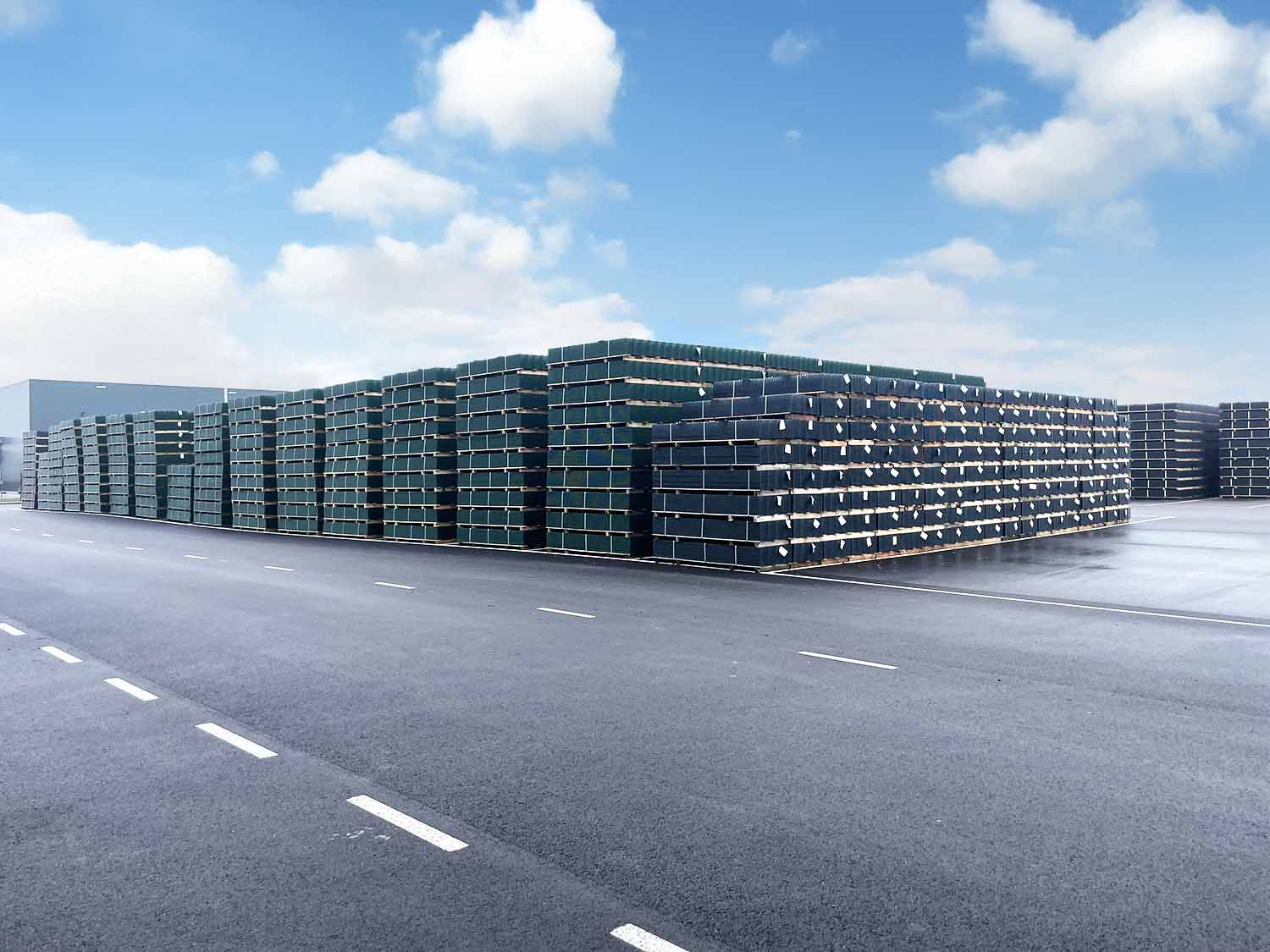
Panels and posts out of our own mill, so the delivery date is not a third party's promise.
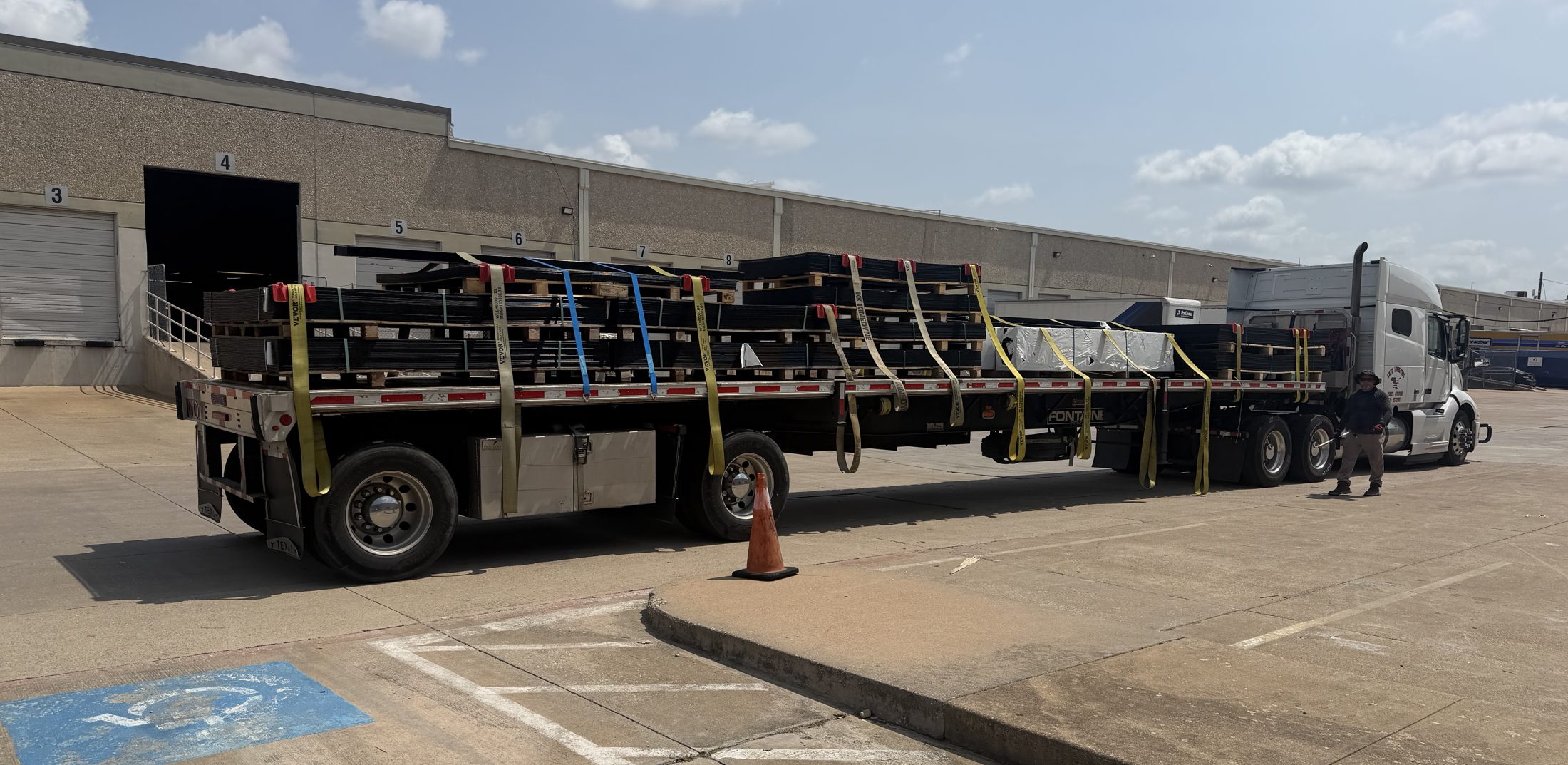
Bundled by phase and run, straight from the Dallas warehouse, or will-call the same day.
Installation instructions, post-setting details and someone on the phone while the crew is still on site.
Northern Virginia, Dallas-Fort Worth, Phoenix, Atlanta, Columbus, Chicago, Silicon Valley, Hillsboro, Council Bluffs, Salt Lake City, San Antonio and Reno.
Building in North America and Europe? You get one specification and one document set in the United States, the Netherlands, Germany, France and the United Kingdom.
Gulf coast humidity and Phoenix UV are two different problems and both eat coatings. Duplex finish, stainless hardware, and a coating report that proves the thickness.
Frequently asked
Not in the United States. We supply the system, and your installer or GC sets it. That is a deliberate split: we are the mill and the spec, they own the crew and the schedule.
What we do bring to the install is everything the crew needs to keep the rating intact: installation instructions per system, post-setting schedules, cut sheets, and a phone number that gets answered while they are still on site. If you do not have an installer yet, our contractor page is where to start.
It follows from your response time, not from a table. The delay of your lines added up has to beat the time between detection and someone arriving.
On a campus with guards on site we typically see A1 on the site line and B3 or C5 on the technical zone. On a remote site where response has to drive in, those ratings move up.
They answer the same question in two markets. LPS 1175 from BRE, certified through the LPCB, rates a system by toolkit and by minutes of delay, and lists it on the public RedBook Live register. ASTM F2781 is the American practice, with three forced-entry threat levels, a defined hand-tool inventory and its own rating system, written with military and DHS use in mind.
Our systems are certified to LPS 1175. If your specification calls out F2781, tell us early and we will say plainly what we hold and what we do not, instead of letting two standards blur together in a submittal.
Extended, yes, as long as you place the same certified build and follow the installation instructions.
Modified is a different story: cutting an opening, shortening a panel or swapping in another post takes the rating off. For temporary access during construction we supply removable panels that keep the rating intact.
We deliver the mechanical layer detection-ready: brackets for fence-mounted sensors, cable tray or empty conduit along the run, mounting points for cameras and thermal, pull boxes and grounding lugs.
The detection itself and the tie-in to your SOC or PSIM stays with your integrator, on our provisions. You keep the platform you already run.
Panels and posts come out of our own mill and stock, bundled by phase and by run so nothing sits on the site before the crew needs it. Flatbed freight goes to all 48 contiguous states, and Dallas has will-call when a crew wants material in hand today.
Temporary construction fence and the permanent line get planned on the same drawing, so the site is never open between phases.
Next step
Not a price list and not a brochure. A proposal your security officer can read: rating per line, delay, and the places where we see a gap nobody has named yet.
The quote form asks for the site, the run in linear feet and your schedule. Rather talk it through first? 214 878 1900.
10390 Shady Trail Suite 100 · Dallas, TX 75220
One specification, one document set and the same mill behind it in the United States, the Netherlands, Germany, France and the United Kingdom. Your portfolio stays on a single standard.
Last reviewed 2026-08-04
Our customer service team is happy to help, by phone, chat or email.
We are here to help
Monday to Friday, fast and personal support