
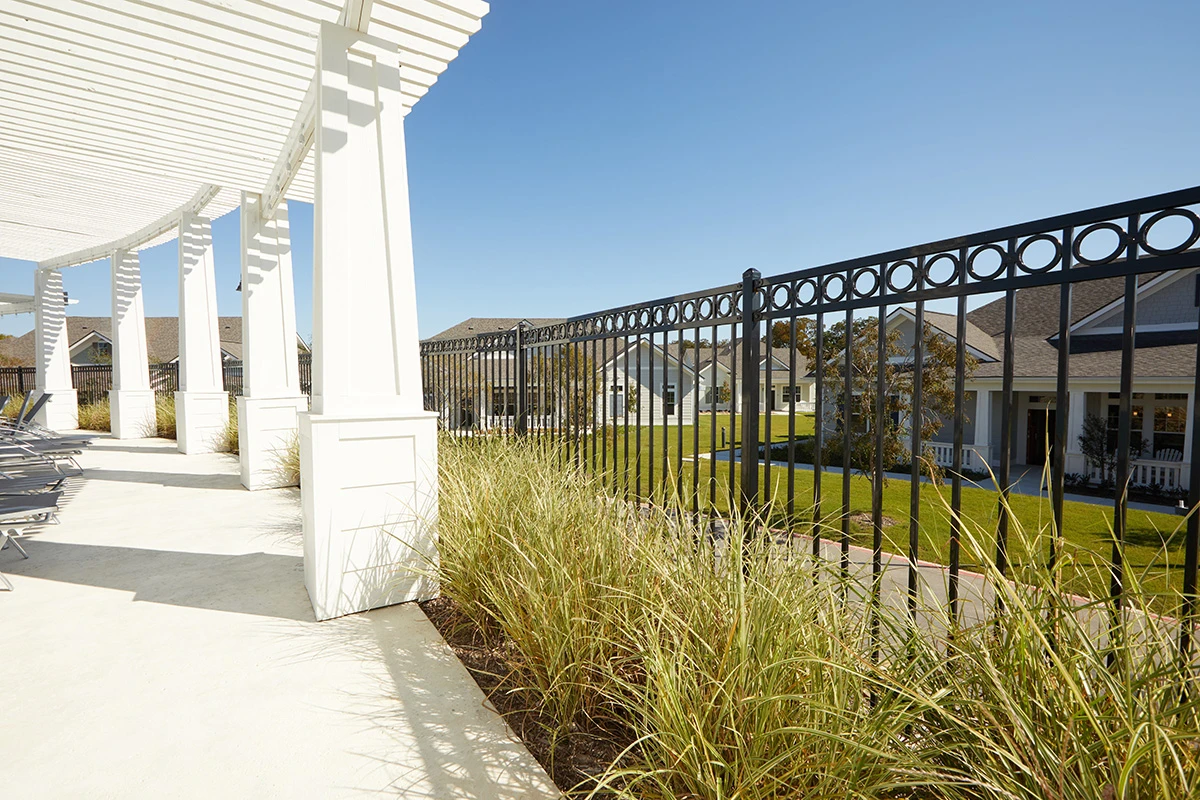
Most fences sold as "wrought iron" today are not wrought iron at all. They are ornamental steel or aluminum: welded picket panels with the same classic black look, made to last for decades with almost no upkeep. Real wrought iron, forged by hand, is barely made any more.
So the real choice is between ornamental steel and aluminum, and the right one depends on what the fence has to do. This guide compares the three on strength, rust, upkeep, height, pool use and cost, and tells you which metal fence fits a home, a pool, a commercial frontage or a security perimeter.
What is a wrought iron fence today?
Wrought iron is iron worked by hand: heated, hammered and forged into bars, scrolls and spear tops. It built the fences of old city parks and estates, and that is the look people still ask for, whether they search for a wrought iron fence, an ornamental iron fence or a "rod iron" fence.
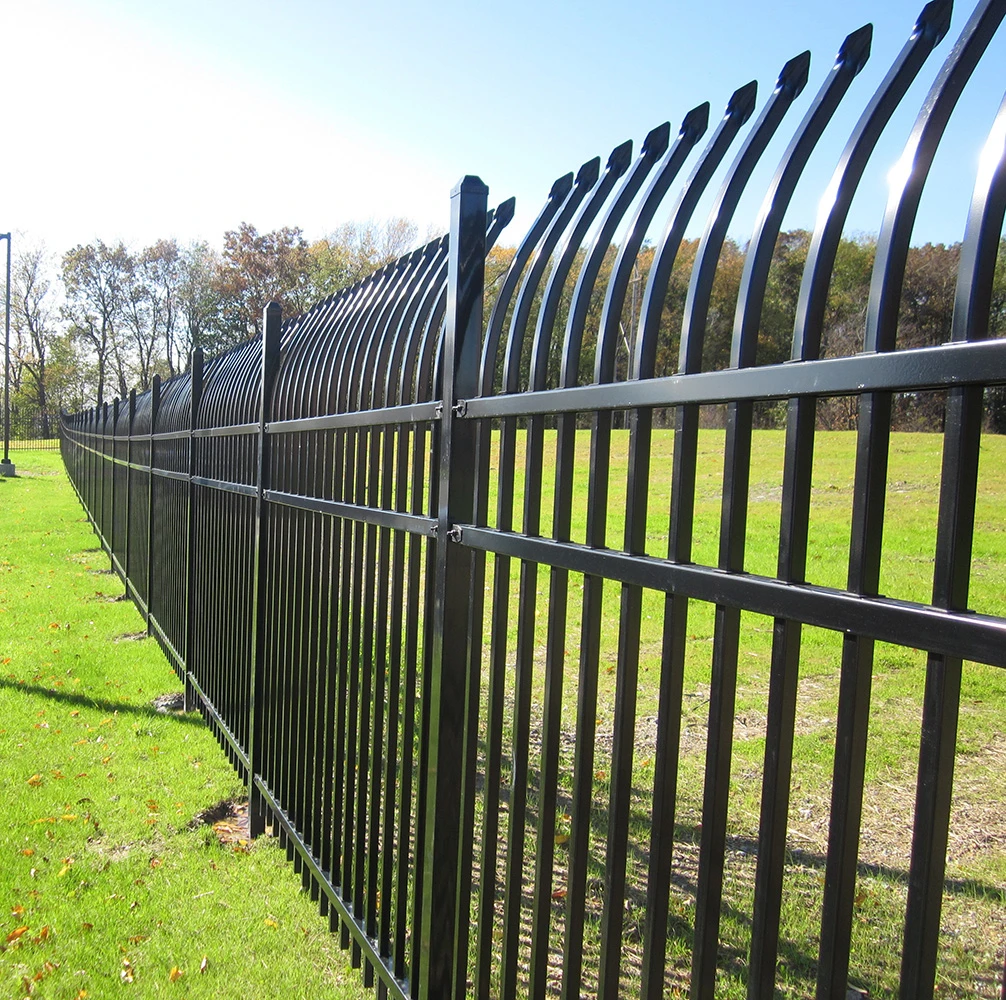
Genuine wrought iron is barely produced any more, and a custom forged fence costs many times more than a modern one. What is sold under the name today is ornamental steel or ornamental aluminum: square tubing with vertical pickets welded between horizontal rails, finished in black powder coat. From the street it looks the same. Up close it is lighter, straighter, far cheaper to buy and much easier to keep looking new.
Ornamental steel fence: strength and height
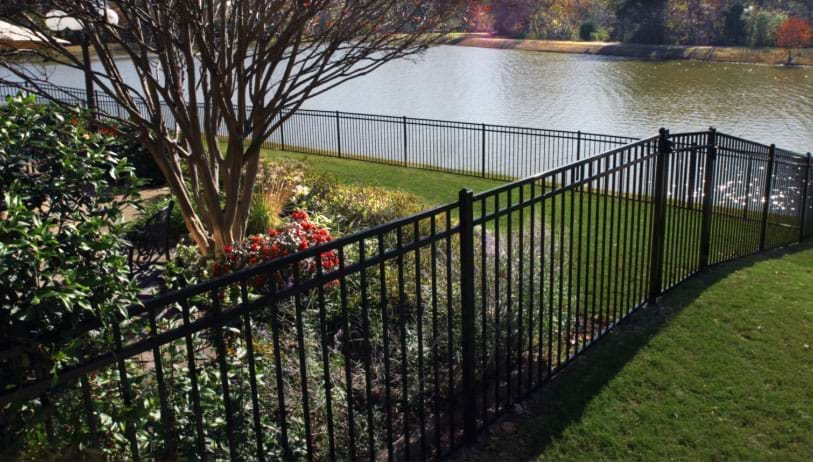
Ornamental steel is the strongest and stiffest of the three. It takes impacts, carries wide gates and goes higher than any aluminum fence, which is why it is the choice for commercial frontages, schools, apartment communities and security perimeters, as well as for homes that want a solid, classic fence.
Good steel fence is protected in layers: galvanized steel, an e-coat and a black powder coat on top. Fortress, for example, builds every steel panel, gate and post that way and backs it with a 20-year limited warranty. As long as the coating is intact the steel cannot rust; if a scratch reaches bare metal, clean it and touch it up with black paint.
- Residential: Fortress Versai with 5/8" pickets, or Fenceweb residential panels, for yards and front gardens.
- Commercial: Fenceweb commercial panels with 3/4" pickets, or Fortress V2, up to 8 ft high.
- Industrial and security: Fenceweb industrial panels and Fortress V3 and Titan with 1" pickets; Titan reaches 10 ft, with curved and Shield anti-climb tops.
Aluminum fence: no rust, light and low maintenance
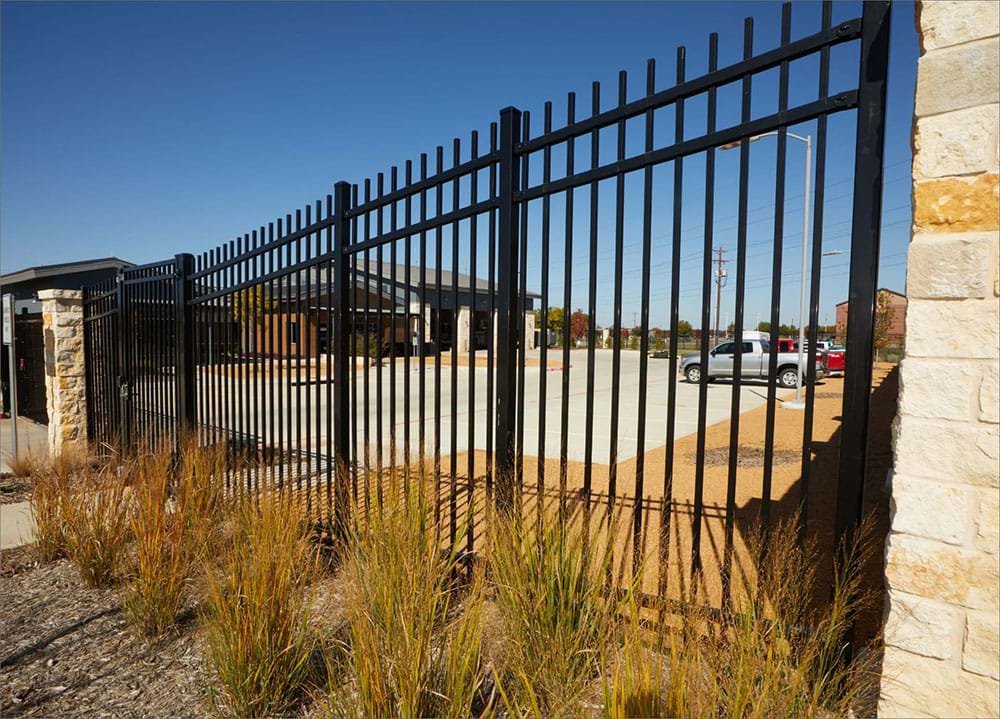
Aluminum cannot rust, even where the coating is scratched, and weighs about a third of steel. That makes it the natural choice around swimming pools, near salt water and anywhere the fence gets wet a lot. A yearly rinse with water is all the care it needs.
The trade-off is strength and height. Aluminum is softer than steel, so it is built for homes, pools and light commercial use rather than security, and most aluminum picket fence stops at 6 ft. Fortress gives its aluminum lines a limited lifetime warranty.
- [Fortress Athens](/brands/fortress?type=athens): residential aluminum picket fence, 3 to 6 ft high, with flat top, pressed spear, extended picket and pool styles.
- [Fortress A2](/brands/fortress?type=a2): commercial aluminum fence with 3/4" pickets and 1-1/2" rails, 4 to 6 ft high, for apartment communities, schools and commercial pools.
- [Gardenode Equinox](/brands/gardenode): for privacy instead of pickets, horizontal aluminum slats that close the view completely, in four colors.
Side by side: steel, aluminum and wrought iron
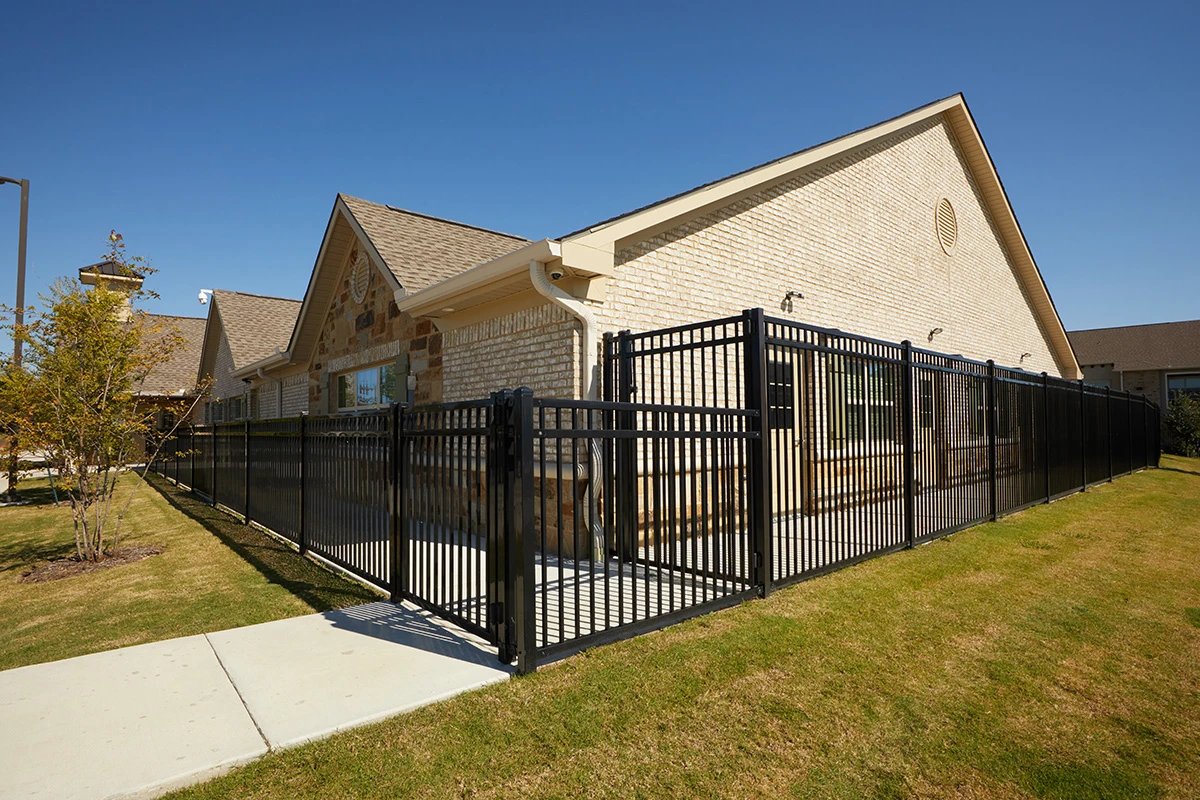
- Strength: steel is the strongest; aluminum is lighter and softer; real wrought iron is strong but heavy.
- Rust: aluminum never rusts; coated steel does not rust while the coating is intact; bare wrought iron rusts and needs paint.
- Upkeep: a rinse for steel and aluminum; scraping and repainting every few years for wrought iron.
- Height: steel up to 10 ft; aluminum up to 6 ft; wrought iron is made to order.
- Best for: steel for commercial, industrial and security fences and wide gates; aluminum for pools, coastal homes and low-maintenance yards; wrought iron for restoring historic fences.
- Price: ornamental steel and aluminum are standard panels at standard prices; hand-forged wrought iron costs far more and takes weeks to make.
Which metal fence is best for a pool?
Both steel and aluminum make good pool fences, as long as the panel is built for it. Most US pool codes ask for a barrier at least 48" high, gaps a 4" sphere cannot pass through, no more than 2" between the ground and the bottom of the fence, and self-closing, self-latching gates. Rules differ by state, county and city, so check with your local building department before you order.
Aluminum is the favorite next to the water because it never rusts. Fortress marks Athens from 48" and A2 from 54" as meeting the pool code in their pool styles. In steel, Fortress Versai Assurance and V2 Commercial Assurance close the air space between the pickets to 3" instead of 3-7/8". Browse all pool fence and add a self-closing hinge and a pool gate latch from our gate hardware.
How to choose: four questions
- 1. What must the fence do? Mark a boundary or enclose a pool: steel or aluminum. Keep people out: steel, in commercial or industrial grade, with an anti-climb top.
- 2. How high? Up to 6 ft, both work. Above 6 ft, choose steel.
- 3. How wet is the site? Pools, sprinklers and coastal air favor aluminum.
- 4. Does it need wide gates? Drive gates and sliding gates are stiffer and hang better in steel.
Metal fence panels, posts and gates on Fenceweb
Every metal fence is a system: panels, posts, brackets and gates from the same line, so the run fits together. Start from ornamental fence for steel picket fence, aluminum fence for rust-free picket and slat fence, or see all metal fence panels, including welded wire and security fence. Comparing commercial options? Read welded wire vs chain link vs ornamental steel, or see why galvanized and black chain link is the budget choice for a long perimeter.
Fenceweb delivers to every US state and to Canada. Fenceweb ornamental panels, posts and gates ship from Dallas, Texas, and Fortress products ship by freight from Texas (why Fenceweb is a Fortress dealer); where a size has no price on its product page, request a quote and we price the fence and the freight together.
Frequently asked questions
Is a wrought iron fence the same as a steel fence?
No. Wrought iron is hand-forged iron and is rarely made today. What is sold as a wrought iron or ornamental iron fence now is almost always ornamental steel: welded steel tubing with a black powder coat that gives the same look for far less money and upkeep.
Which is better, an aluminum or a steel fence?
Steel is stronger and goes higher, up to 10 ft, so it is better for security, commercial use and wide gates. Aluminum never rusts and is lighter, so it is better for pools, coastal homes and low-maintenance yards up to 6 ft.
Does an ornamental steel fence rust?
Not while its coating is intact. Good ornamental steel is galvanized, e-coated and powder coated; Fortress backs its steel fence with a 20-year limited warranty. If a scratch reaches bare steel, clean it and touch it up with black paint.
What is the best metal fence for a pool?
Aluminum is the most popular pool fence because it never rusts. Choose a panel marked as meeting the pool code, such as Fortress Athens from 48" or A2 from 54", or a steel Assurance panel with pickets 3" apart, and fit self-closing, self-latching gates. Always check your local pool code.
How tall can a metal fence be?
Aluminum picket fence usually goes up to 6 ft. Ornamental steel goes higher: Fenceweb panels up to 93", Fortress V2 and V3 up to 8 ft and Fortress Titan up to 10 ft. Check your local zoning rules, which often limit front yard fences to 3 or 4 ft and back yard fences to 6 ft.
Can a metal fence follow a slope?
Yes. Rackable panels follow the ground without cutting: a Fortress Versai panel racks up to 48" over 8 ft, a V2 panel up to 30" and a V3 panel up to 24". On steeper ground, step the panels between the posts.
Can I install a metal fence myself?
A residential run, yes. Set the posts plumb in concrete at the panel spacing, fix the brackets, then hang the panels and gates. For long, tall or commercial runs, most customers use a fence contractor.
Find your metal fence
Browse ornamental steel fence and aluminum fence, send us your plan for a project quote, or call 214 878 1900 or email info@fenceweb.com. Fence contractors and dealers can open a company account for their own pricing.